Shri Guru Ravidass Sabha Uae Ind
+91 78091-33786
Office No: 04-3499786
UAE, Dubai, United Arab Emirates
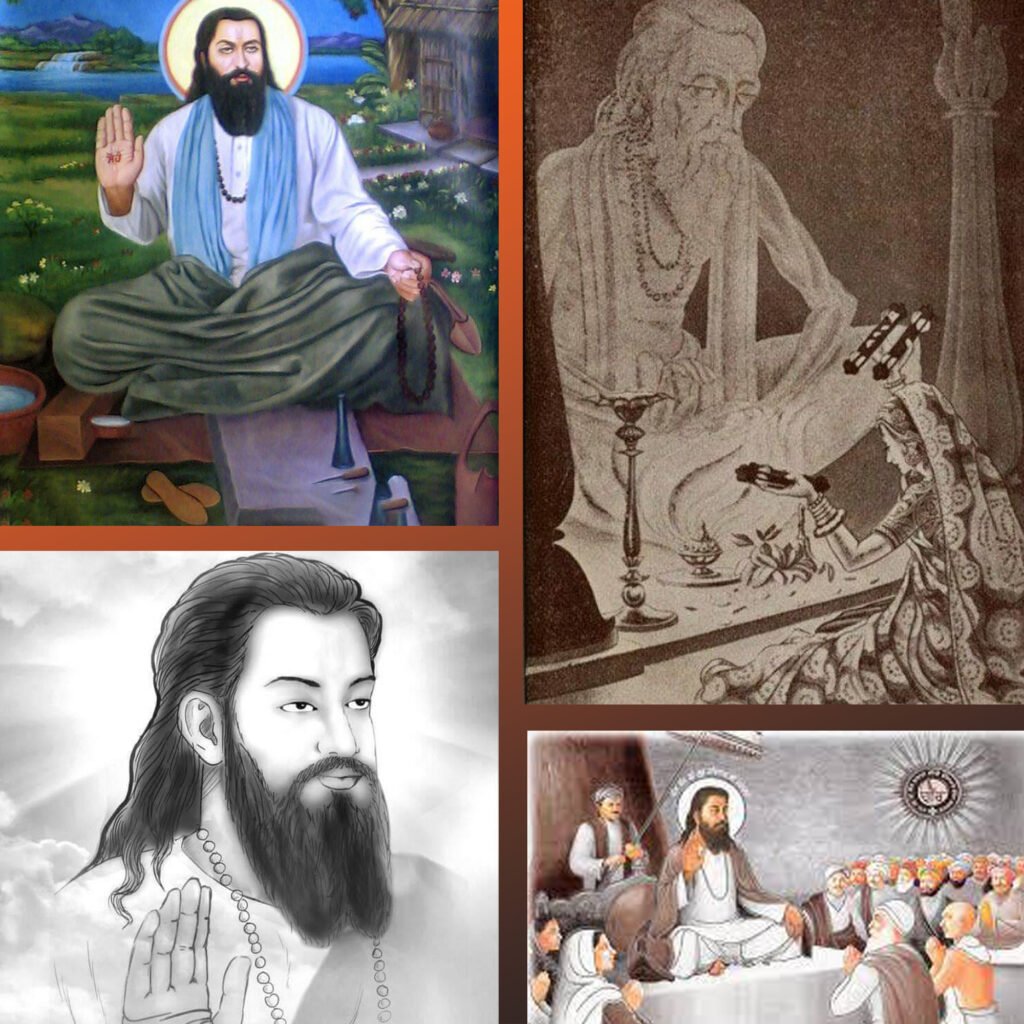
A Brief Introduction
Guru Ji spearheaded the fight against man-made discrimination based on caste, colour or creed and preached the lofty ideas of socialism, secularism, equality and fraternity. From very childhood, he was very much devoted to worship Real God. The caste Brahmans created many problems for him. Guru Ji had to appear before King Nagarmal so many times.
It is said that Guru Ravidass Ji disappeared from the world, leaving behind only his footprints. Some believe that Guru Ravidass Ji lived in banaras during his last days, dying a natural death at the age of 126 years.
Contribution to Sikhism
The 41 hymns of Shri Guru Ravidassji included in the Guru Granth Sahib fall under:
Raga – Siri(1), Gauri (5), Asa(6), Gujari(1), Sorath(7), Dhanasari(3), Jaitsari(1),Suhi(3), Bilaval(2),Gaund(2),Ramkali(1),Maru(2),Kedara(1), Bhairau(1),Basant(1), and Malhar(3). One with slight variations is given in both Rag Sorath and rag Maru
Inspite of his low caste, Guru Ravidass rose to a position of great honour through a life of simplicity and piety. He never felt ashamed of his pedigree and faced fearlessly the pandits, who were proud of their high caste. He told them the spiritual greatness is achieved through a loving devotion to the Lord. He boldly proclaims,
“O people of the city, everyone knows
I am a cobbler by trade and tanner by caste
One of the low caste, and yet within my heart
I meditate upon God.”
“I am haunted day and night by the thought
Of my low birth, society and deeds
O God! the Lord of the Universe!
O life of my life – forget me not
I am ever Thy slave.”
He was such a faithful Guru that once he gave a farthing (Damri) to some sadhus, who were going to Hardwar, requesting them to offer it to Ganga Mai on his behalf. They say that when the sadhu presented the damri sent by Guru Ravidass, Ganga stretched out her hands to receive it. He was greatly respected during his life time to the extent that even veteran pandits of Kanshi bowed before him. Tradition has it that Queen Jhalan of Mewar became a follower of Guru Ravidass. But despite close contacts with an affluent section of the society, he chose to live austerely.
They say that someone once offered him a paras (the philosopher’s stone that turns cheaper metal into Gold) and assured him he could get any amount of wealth by making use of it. Guru Ravidass Ji asked him to place it in a corner. When he came to Guru Ravidass again after some months, he found the saint still lurking in poverty. He asked the Guru why he had not utilized the paras. Guru Ravidass remarked that for him, “God’s Name alone was the paras, that was the “kamdhen” and “chintamani”.