Shri Guru Ravidass Sabha Uae Ind
+91 78091-33786
Office No: 04-3499786
UAE, Dubai, United Arab Emirates
Menu
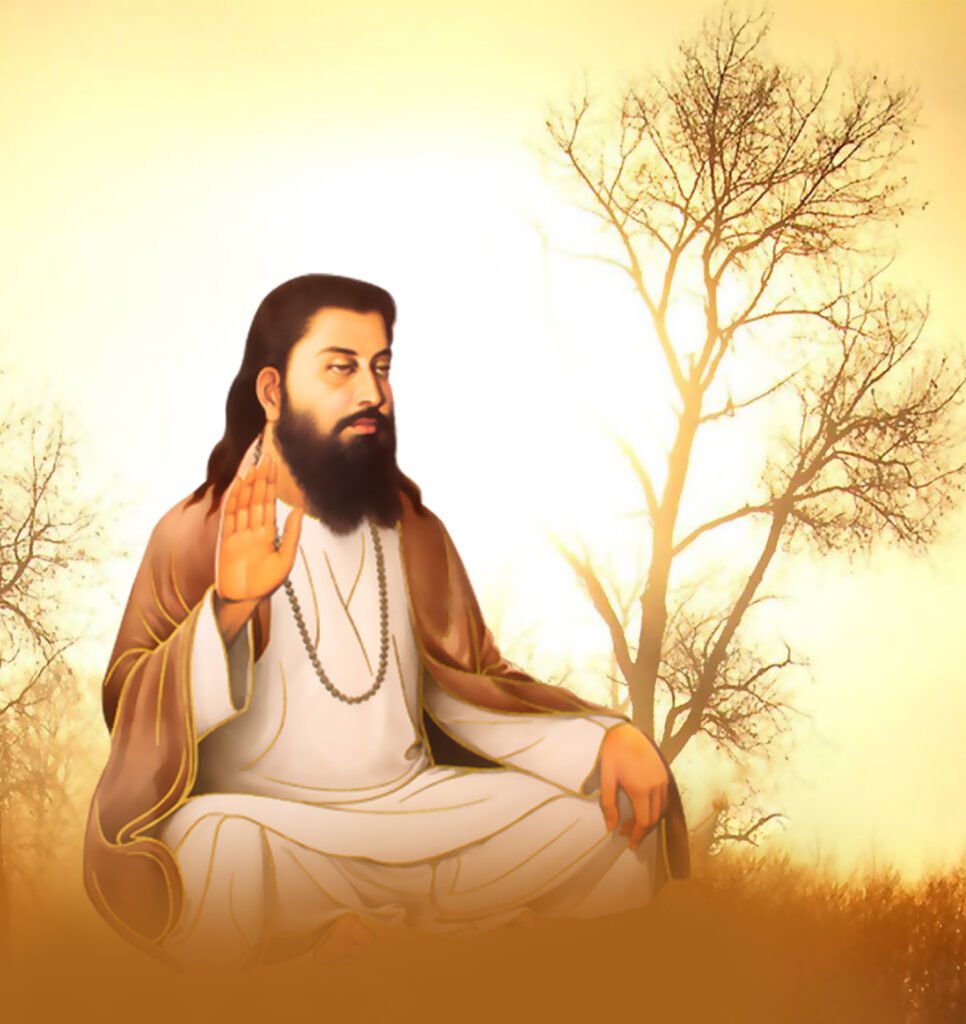
Life of Shri Guru Ravidas Ji
It is said that the merciful CREATOR of the world never neglects HIS CREATION, and continually sends HIS MESSENGERS to the world on missions of mercy to save HIS seekers and devotees. These Messengers, carrying the message from the ALMIGHTY GOD, come in the form of Saints and Mystics, impart the message of love and devotion for GOD, and take their disciples and devotees back to the ALMIGHTY Lord. Guru Ravidass ji (Ravi=Sun) was such a MESSENGER who came to this world from the ALMIGHTY GOD in the year 1471 of the Vikram era (1414 A.D.) on the Full-Moon (Puran Mashi) day of the month Magh, which was a Sunday. In the village of Seer Goberdhanpur, Kanshi, Banaras, Uttar Pradesh, Northern State of India. This is the traditionally celebrated birthday of Guru Ravidass ji among the adherents of his religion. Guru Ravidass ji mother’s name was Mata Kalsi and father’s name was Baba Santokh Dass ji, who was working as a Sarpanch (clan leader), in the Kingdom of Raja Nagar Mal.
It is said that it was God himself, in the guise of a holy man, had come either to relieve Guru Ravidass ji of his poverty or to test his contentment. Guru Ravidass ji’s attitude in this regard is well expressed in the following verses:
Not the slightest liking have I for the philosopher’s stone, it causes entanglement in the world. Giving up all craving, I fix my mind in the holy feet of the Lord alone, says Guru Ravidass ji.
If thou aspirest to the highest bless, then contentment in mind thou must inculcate. Where there is contentment, no blemish can stand, says Guru Ravidass ji. True happiness lies in realizing true holiness, no happiness is there in accumulating wealth. The accumulation of wealth is a storehouse of miseries, realize this fact in thy mind, O Guru Ravidass. For Guru Ravidass ji, the Real Philosopher’s stone is the Name of God, which transforms Sinners into Saints, and makes Mortals Immortal. As Guruji puts it:
- How Can Iron (Human Life) be transformed into Gold,
- If the Philosopher's stone touched it not?
- Men understand not, sayeth Guru Ravidass.
- Like mad men they have lost their way.
- God's Name alone is my Support,
- It alone is my Life, my Vital-Breath and Wealth
Guru Ravidass ji’s fame as a Devotee of God enraged the Brahmins of Kanshi. It is evident that Guruji met with frequent opposition from the priestly classes. Yet Guruji had a tremendous impact on the Society. Having been born in a low-caste family, Guru Ravidass ji was looked down upon by the Brahmins who considered him unqualified for practising devotion to God. For a low-caste Cobbler to Preach and Practice Holiness was a sacrilege in their eyes.
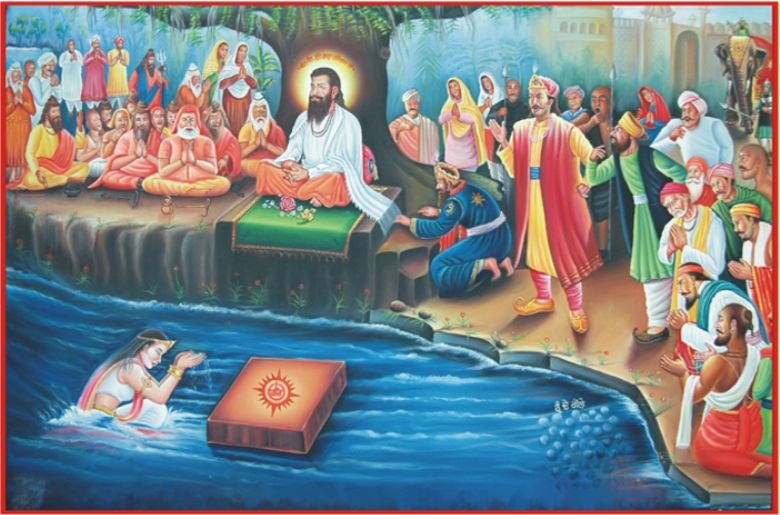
The Brahmins of Kanshi made a challenge to Guru Ravidass ji when they asked Guruji to prove the power of his ‘Shaligram’ (a spherical stone idol traditionally worshipped by Brahmin priests) by making it float on the River Ganges. Guru Ravidass ji gently replied that he did not worship any Shaligram. But on the insistence of the Brahmins, Guruji said that the stone upon which he repaired his shoes was his only Shaligram. Accordingly, the Brahmins first threw their Shaligrams into the river. They ALL sank at once. Guru Ravidass ji then threw in his stone, and to the Brahmins surprise and dismay, it remained floating on the water. Thus the Brahmins, in trying to humiliate Guru Ravidass ji, were themselves humiliated. Guru Ravidass ji alludes to this boastful challenge of the Brahmins in the following verse:
The Brahmins of Kanshi made a challenge to Guru Ravidass ji when they asked Guruji to prove the power of his ‘Shaligram’ (a spherical stone idol traditionally worshipped by Brahmin priests) by making it float on the River Ganges. Guru Ravidass ji gently replied that he did not worship any Shaligram. But on the insistence of the Brahmins, Guruji said that the stone upon which he repaired his shoes was his only Shaligram. Accordingly, the Brahmins first threw their Shaligrams into the river. They ALL sank at once. Guru Ravidass ji then threw in his stone, and to the Brahmins surprise and dismay, it remained floating on the water. Thus the Brahmins, in trying to humiliate Guru Ravidass ji, were themselves humiliated. Guru Ravidass ji alludes to this boastful challenge of the Brahmins in the following verse:
- "Guru Ravidass ji, the humble one, tells the Truth.
- Reflecting on the True Knowledge,
- Let thou fix thy mind in the Holy Feet of the Lord
- And let thou take shelter under Him."
- "They (priests) pluck leaves and perform worship,
- And call the idol the One who takes men across the ocean of the World.
- If God resides in the Idol. Then they say, it should surely float on water."
On another occasion, the Brahmins of Kanshi approached King Nagar Mal with a request to prevent this lowly born Shudra from worshipping God. In the court of the King, Guru Ravidass ji was challenged to explain the outrageous presumption of offering devotion to God while only a cobbler by birth. Guru Ravidass ji humbly explained that CASTE AND CREED are MAN-MADE distinctions that constitute NO-BARRIERS in offering devotion to God. At last the King left the decision to God Himself.
An image of God was placed in the middle of the Royal court; the Brahmin priests and Guru Ravidass ji were asked by turn to draw the image to them through the power of their devotion. The priests tried their best to attract the image of God through recitation and chanting, but it was No-avail. When Guru Ravidass ji’s turn came, Guruji fervently prayed to God as follows:
An image of God was placed in the middle of the Royal court; the Brahmin priests and Guru Ravidass ji were asked by turn to draw the image to them through the power of their devotion. The priests tried their best to attract the image of God through recitation and chanting, but it was No-avail. When Guru Ravidass ji’s turn came, Guruji fervently prayed to God as follows:
- "Act not in such a way, O my Load,
- That my work may go wrong,
- And Thou may merely watch,
- Sitting at a distance…………
- Kanshi is crowded with a multitude of people
- Who have come to witness the assembly of devotees;
- Keep up or give up Thy reputation of being the Saviour of the poor and the lowly
- Prays Guru Ravidass the cobbler.
- I have come to Thy shelter, O God of all gods,
- Have mercy on me, thinking me Thine own……
- With confidence in Thy Name, I have given up hope of others,
- My mind finds no comfort in worldly observances,
- Accept the service of Guru Ravidass, Thy Slave O Lord,
- And manifest Thy Name, the purifier of the fallen ones." Lord,